Why Fatigue Is So Hard To Figure Out
Most people are told their fatigue comes down to one thing: sleep, stress, or a lab value that's slightly off. But fatigue rarely works that way.
It usually develops when several systems are under strain at the same time. Each one may seem minor on its own, but together they significantly affect energy, recovery, and daily function. That's why treating one thing rarely resolves the whole picture.

Still have questions? The discovery call is free.
GET IN TOUCHTHERE IS HOPE
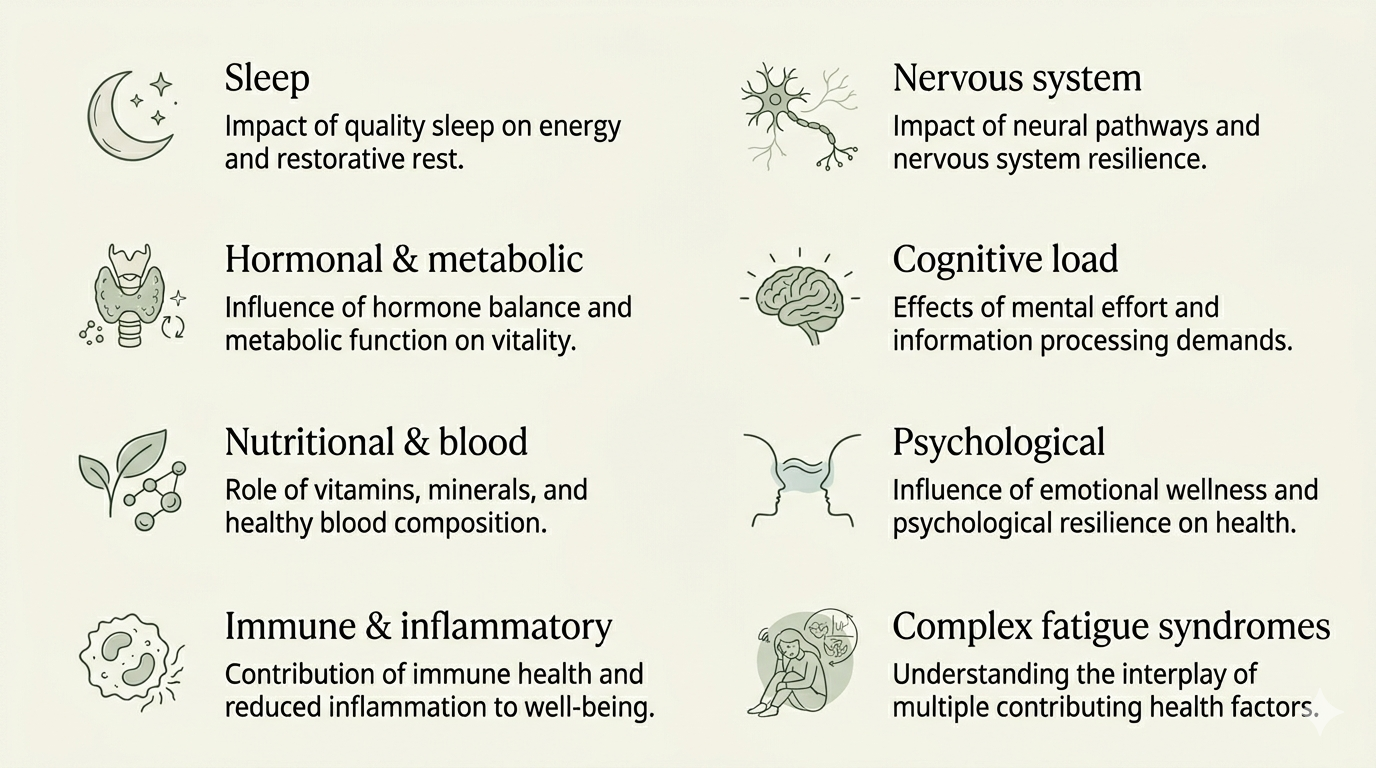
The Most Common Drivers Of Fatigue:
Most patients have more than one of these. The goal is to understand your pattern, not chase a single cause.
Fatigue Doesn't Look The Same For Everyone
WHAT THIS LOOKS LIKE IN REAL LIFE
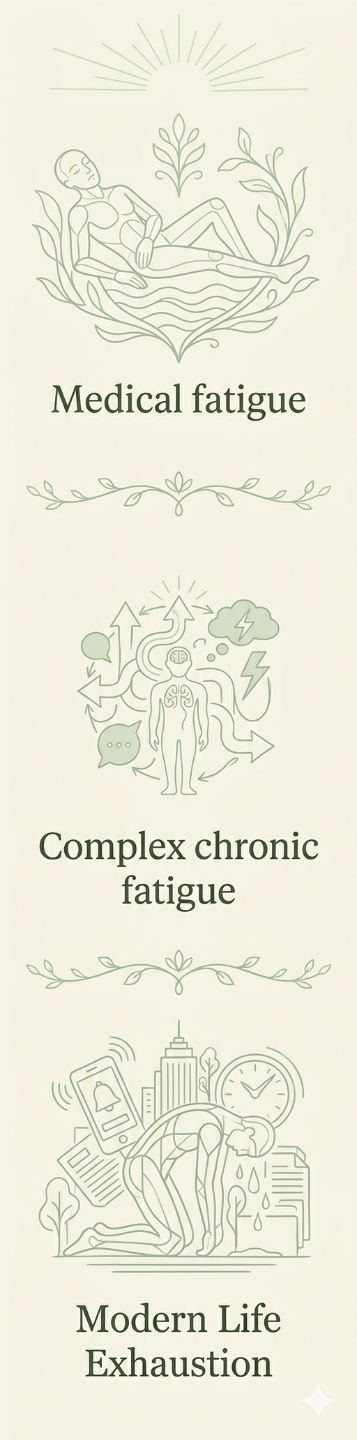
Most patients fall into one of three general patterns:
1. Medical fatigue
Fatigue driven by an underlying medical condition such as anemia, thyroid disease, sleep apnea, trauma, depression or autoimmune illness.
Often:
- newer or worsening
- associated with measurable findings
- improves when the condition is treated
2. Complex chronic fatigue
Long-standing fatigue involving multiple systems, often seen in conditions like ME/CFS, long COVID, or chronic pain syndromes.
Often:
- persistent
- worsened by exertion
- difficult to explain with a single diagnosis
3. Modern life exhaustion
Fatigue driven by sleep disruption, stress, cognitive overload, and lifestyle factors.
Often:
- labs are normal
- ongoing but variable
- improves with structured changes
Patients leave with a clear understanding of their fatigue pattern and a plan for how to move forward.
HOW WE APPROACH THIS
-
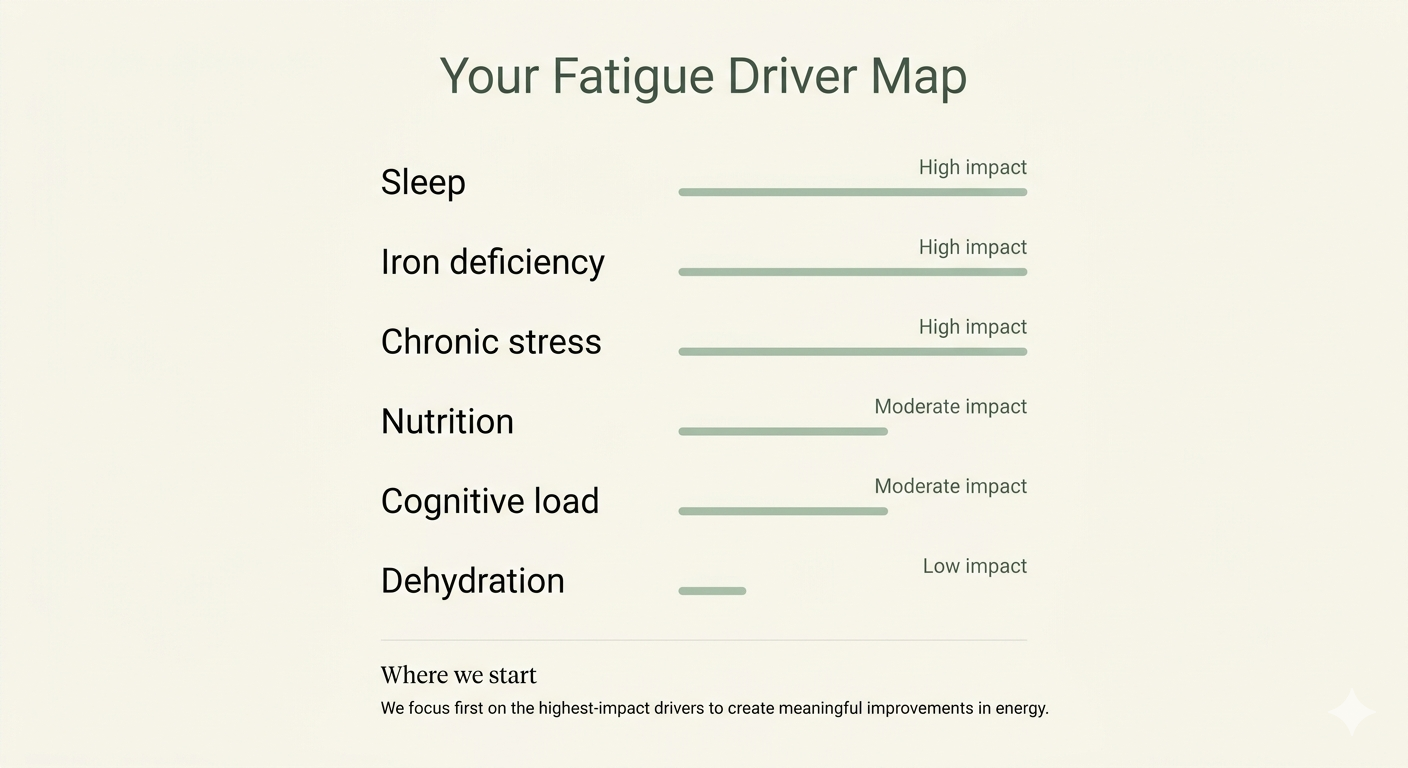
Instead of focusing on one possible cause, we evaluate the full picture.
We look for:
- the most impactful drivers
- how they interact
- what to address first
- We then apply a stepwise approach, focusing on the highest-impact areas first so improvements can build over time. We refer to this as the Fatigue Snowball Plan.
What this means for you...
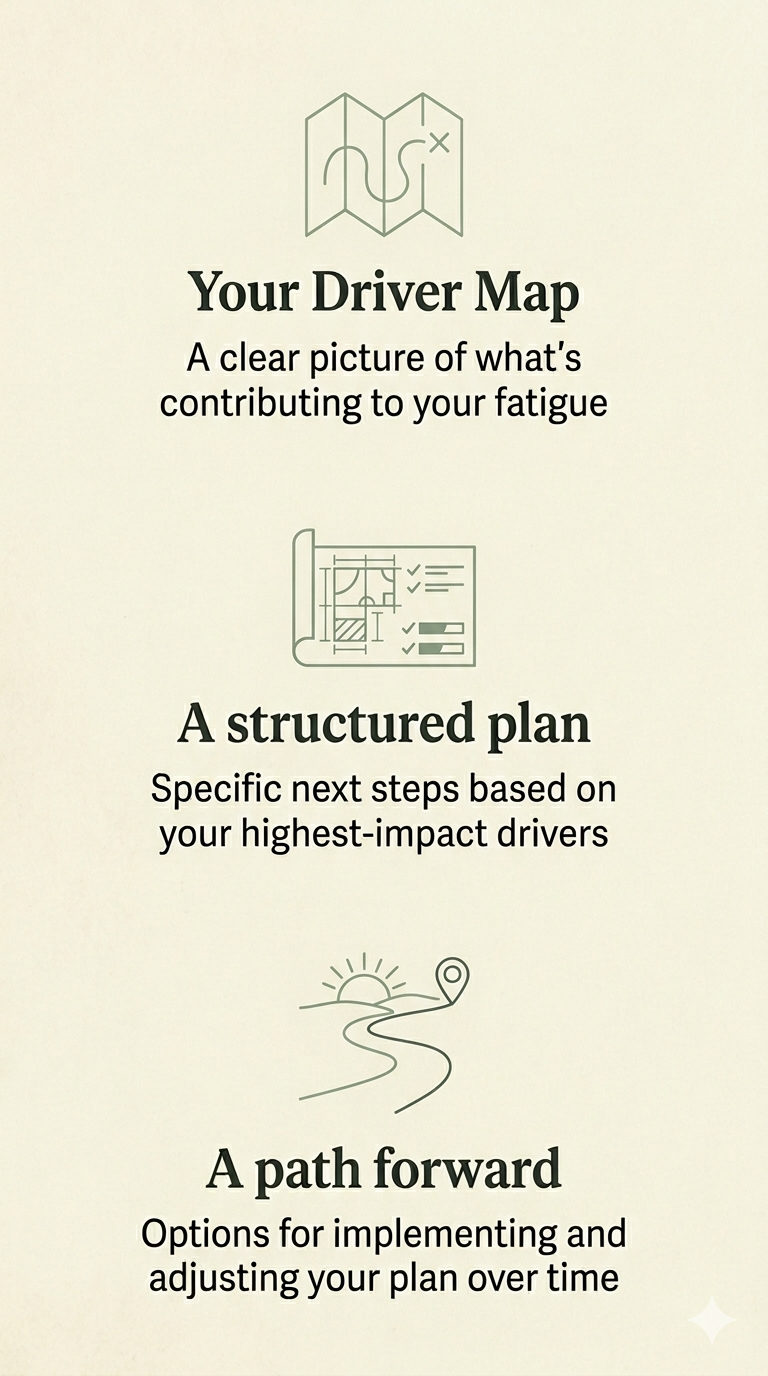
After your evaluation, you’ll have:
- a clear breakdown of your fatigue drivers
- a structured plan
- guidance on next steps
Some patients choose to implement the plan on their own.
Others continue with ongoing care and support to help with implementation and adjustment over time.
YES, I WANT IN!